Introduction: Why 2026 Is a Breakout Year for AI Agents
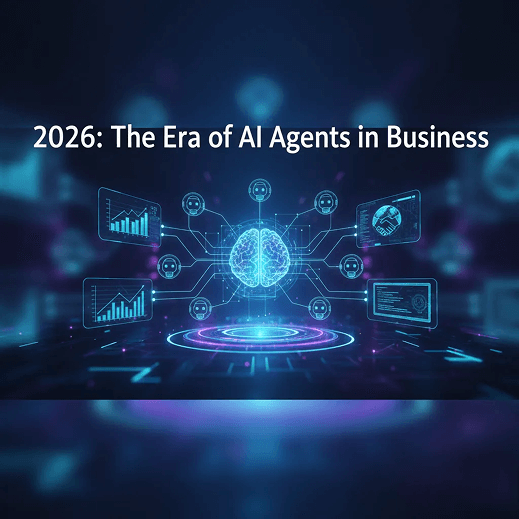
2026 is set to be the year when AI agents move from promising prototypes to production-grade teammates embedded across enterprise workflows. Industry analysts predict that a large share of enterprise applications will embed task-specific AI agents, automating not just responses but complete business processes. For forward-looking companies, this shift will redefine what “AI enablement” really means, turning AI from a support tool into a core operating layer.
As enterprises double down on data-driven digital transformation strategy and Generative AI Consulting, agentic AI will become the connective tissue between data, models, and day-to-day decision-making. This is the moment to move beyond experimentation and build durable capabilities in AI Enablement Services, Data Engineering Services, and Business Intelligence Services that can scale with these new agent-powered workflows.
What Exactly Are AI Agents?
From Chatbots to Autonomous Co-workers
AI agents are software entities that can perceive context, reason over goals, take actions across tools or systems, and learn from feedback with minimal human intervention. Unlike traditional chatbots that only respond to prompts, agentic systems can orchestrate multi-step workflows such as pulling data from a CRM, enriching it with external sources, making a prediction, and triggering downstream actions automatically.
Key Capabilities of Modern AI Agents
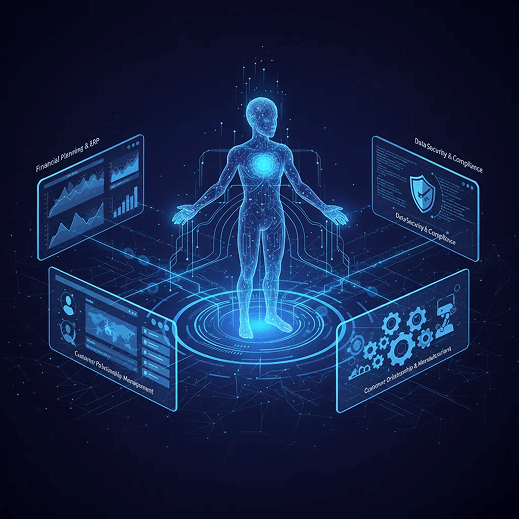
Modern AI agents typically combine large language models, domain-specific tools, APIs, and business rules to deliver end-to-end outcomes. In practice, this means they can handle tasks like data pipeline creation and optimization, AI model development and fine-tuning, and dynamic reporting without constant human supervision. These agents are particularly powerful when paired with strong Data Governance and Quality consulting and robust Data Warehouse Implementation services to ensure trusted inputs and auditable outputs.
Key AI Trends That Will Shape Businesses in 2026
Trend 1 - Agentic Workflows Everywhere
Analysts expect a sharp rise in enterprise software embedding specialized AI agents to drive workflow automation, customer support, and decision intelligence. These agents will increasingly be configured through low-code interfaces, making AI Enablement Services and Prompt Engineering Services essential for aligning behavior with business policies and compliance.
Trend 2 - Data-Centric, Not Model-Centric AI
The competitive edge is shifting toward data assets and infrastructure rather than just model access. Enterprises will invest heavily in Data Engineering Services, Data Warehouse Implementation services, and Healthcare Data Analytics solutions to fuel AI agents with clean, connected, and governed data. This will be critical for advanced scenarios such as AI and Machine Learning for Clinical Diagnostics, Predictive Analytics for Retail, and AI-powered fraud detection banking.
Trend 3 - Governance, Risk, and Responsible Agent Design
As AI agents take on more autonomous decisions, boards and regulators are focusing on safety, transparency, and control. Organizations will formalize AI governance frameworks that cover policy, auditing, and monitoring, often supported by Data Governance and Quality consulting partners.
The Real Impact: What AI Agents Will Change for Businesses
From Isolated Automation to Connected Intelligence
AI agents will connect previously siloed processes across sales, operations, finance, and support, enabling real-time optimization rather than isolated task automation. This connected intelligence will underpin a true Customer 360 view implementation, smarter pricing decisions, and more responsive supply chains.
New Operating Models and Talent Mix
As more routine and semi-structured work is handled by AI agents, human teams will shift toward higher-order tasks like strategy, relationship-building, and oversight. Companies that re-skill employees to work alongside agentic systems and redesign roles; KPIs, and incentives will extract significantly more value than those that treat agents as simple cost-cutting tools.
5 High-Impact Use Cases Businesses Can Implement Immediately
Use Cases Overview
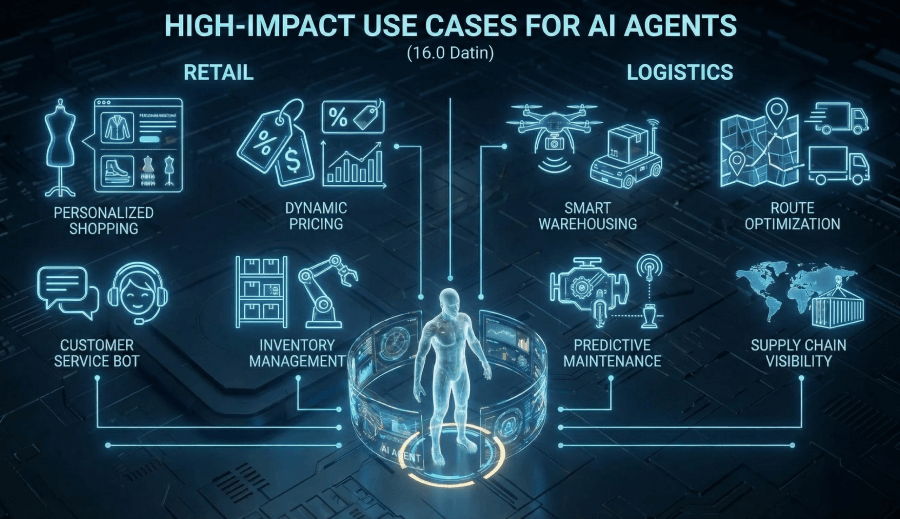
Below is a set of practical AI-agent use cases that many enterprises can implement quickly with the right combination of data foundations and AI Enablement Services.
1. Customer Support Co-pilots
AI agents can act as frontline support, resolving common issues, drafting responses, and escalating complex cases with full context to human agents. When powered by robust Business Intelligence Services and Customer 360 view implementation, these co-pilots can personalize interactions across channels in real time.
2. Predictive Analytics for Retail and Dynamic Pricing
Retailers can deploy AI agents that continuously analyze demand signals, inventory, and promotions to recommend pricing and assortment decisions. These agents integrate Predictive Analytics for Retail with Data pipeline creation and optimization to keep models and dashboards refreshed automatically.
3. Implementing AI in Logistics Operations
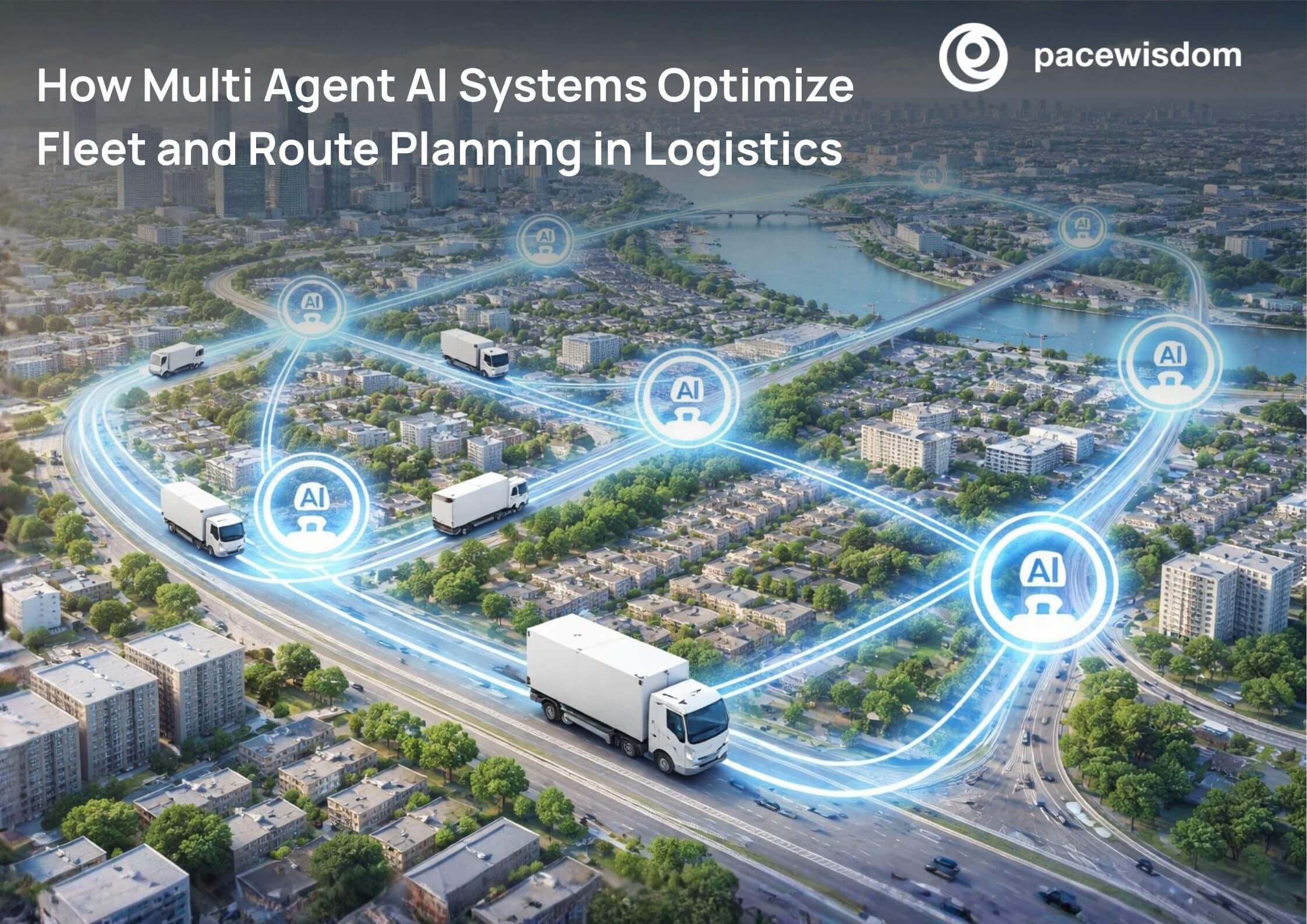
Logistics-focused agents can optimize routing, predict delays, and automatically rebook shipments based on live constraints and SLAs. By tying into data from IoT devices, ERPs, and carrier systems, these agents support data-driven digital transformation strategies in supply-chain-heavy organizations.
4. AI and Machine Learning for Clinical Diagnostics
In healthcare, AI agents can triage cases, prioritize diagnostic workflows, and alert clinicians to anomalies in imaging, lab results, or vital signs. When combined with Healthcare Data Analytics solutions, they support improved outcomes, earlier detection, and more efficient use of clinical capacity.
5. AI-Powered Fraud Detection in Banking
Banks are deploying specialized agents that monitor transactions, user behavior, and third-party data to flag, score, and sometimes auto-block suspicious activities. These solutions blend AI-powered fraud detection banking with Data Analytics Consulting to reduce losses while minimizing false positives and customer friction.
Why Many Companies Will Fail and the 4 Adoption Challenges
Common Pitfalls
Despite the hype, many enterprises will struggle to turn AI-agent pilots into sustainable value. Studies show that a significant share of AI initiatives stall due to unclear ownership, weak data foundations, and lack of integration with core systems.
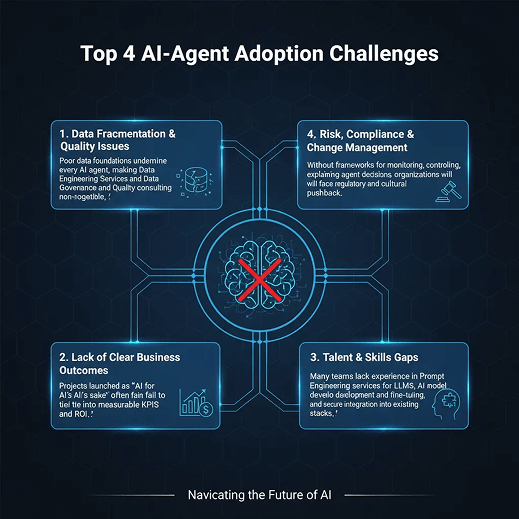
Four Key Challenges
- Data fragmentation and quality issues: Poor data foundations undermine every AI agent, making Data Engineering Services and Data Governance and Quality consulting non-negotiable.
- Lack of clear business outcomes: Projects launched as “AI for AI’s sake” often fail to tie into measurable KPIs and ROI.
- Talent and skills gaps: Many teams lack experience in Prompt Engineering services for LLMs, AI model development and fine-tuning, and secure integration into existing stacks.
- Risk, compliance, and change management: Without frameworks for monitoring, controlling, and explaining agent decisions, organizations will face regulatory and cultural pushback.
How Pace Wisdom Solutions Can Help Enterprises Prepare for the AI-Agent Era
Building the Right Foundations
Pace Wisdom Solutions positions itself as a deep-tech product engineering and consulting partner that helps enterprises harness Gen AI and agentic AI to optimize processes and elevate customer experiences. With capabilities spanning advanced analytics, cloud-native architectures, and AI/ML innovations, the firm supports end-to-end data-driven digital transformation strategy for global clients.
Services Tailored for the AI-Agent Journey
Pace Wisdom offers AI Enablement Services, Data Engineering Services, and Data Analytics Consulting to help organizations consolidate their data, modernize platforms, and prepare for large-scale AI adoption. On top of this, the company supports Generative AI Consulting, Prompt Engineering Services, and AI model development and fine-tuning to design, deploy, and govern enterprise-grade AI agents aligned with business goals.
For industries such as healthcare, retail, logistics, and financial services, Pace Wisdom can architect solutions that blend Healthcare Data Analytics solutions, Predictive Analytics for Retail, implementing AI in logistics operations, and AI-powered fraud detection banking into cohesive, secure ecosystems.
Conclusion: The Next 24 Months Will Decide Winners & Followers
The next two years will separate enterprises that treat AI agents as experiments from those that embed them as a new operational layer across the business. Organizations that invest now in robust data foundations, clear governance, and strategic partners like Pace Wisdom Solutions will be best positioned to turn AI agents into durable competitive advantage rather than short-lived proofs of concept.